
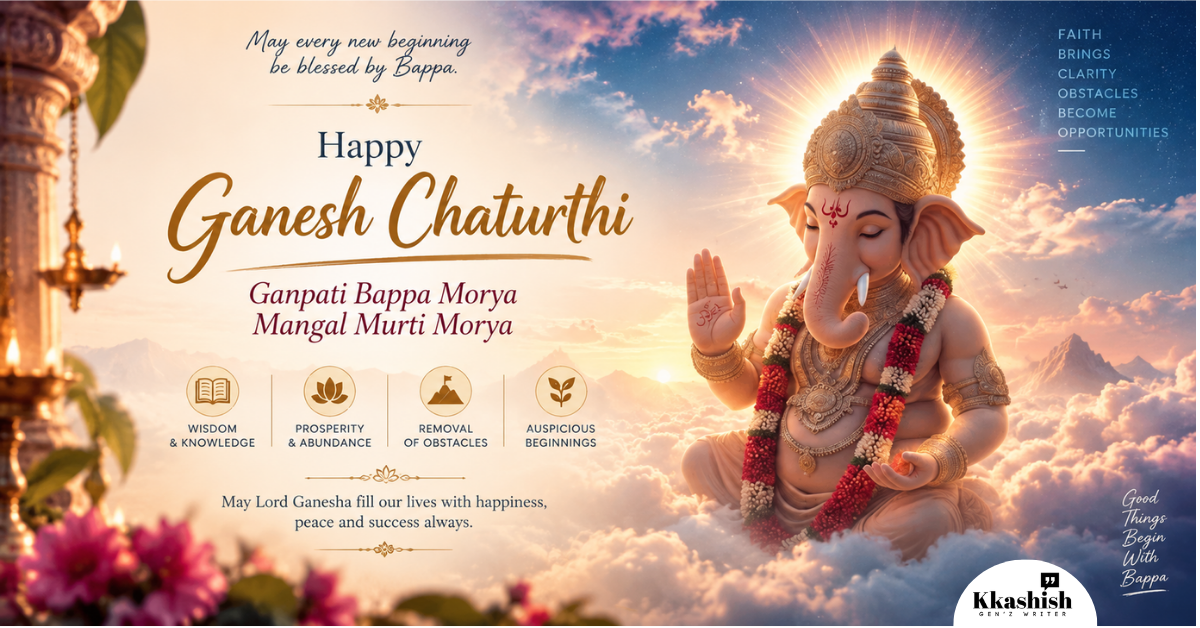
Have you ever felt stuck in life — maybe a new job, a big decision, or just everyday worries standing in your way? That’s when many of us turn to Lord Ganesha. He is the beloved elephant-headed god who removes obstacles and brings wisdom and new beginnings.
Ganesh Chaturthi is the joyful festival that celebrates his birth. For ten days every year, homes and streets across India light up with love, devotion, and pure happiness for this kind and wise god.
Who is Lord Ganesha?
Lord Ganesha is the son of Lord Shiva (the god of transformation) and Goddess Parvati. He has the head of an elephant and a big, round belly. People love him because he is friendly, smart, and always ready to help. Before starting anything new — a business, studies, or even a long journey — many of us first pray to him. You will often see his small statues or pictures in offices, shops, and homes for exactly this reason.
How the Festival Unfolds
The celebration usually lasts about ten days. Families and communities bring home beautiful clay idols of Ganesha. These idols are decorated with flowers, lights, and colourful clothes.
Here’s what happens in simple steps:
- Prana Pratishta: Priests chant special mantras to invite Lord Ganesha’s presence into the clay idol. It feels as if he has really come to stay with us.
- Shodashopachara: A traditional 16-step worship where people offer flowers, incense, sweets, and prayers with full devotion.
- Every day, families share prasad — food that has been offered to Ganesha and then distributed. The most famous sweet is modak, Ganesha’s favourite.
- Many people meditate on the deeper meaning of his form or keep simple fasts.
- On the last day comes Uttarpuja (a farewell prayer) followed by Ganpati Visarjan. With loud chants of “Ganpati Bappa Morya!” and joyful music, the idol is carried in a big procession and immersed in a river, lake, or the sea. This symbolises Ganesha returning to his home on Mount Kailash with his parents.
The whole experience feels personal and community-filled at the same time. You dance, sing, share food, and feel a deep sense of togetherness.
A Short Look at Its History
No one knows exactly when the festival began, but historians say it became a big public event in the 1600s under the Maratha king Shivaji. Later, in the late 1800s, freedom fighter Bal Gangadhar Tilak turned it into a powerful public celebration. In 1892, even when the British did not allow large gatherings, people in Pune and Mumbai still came together with great love for Ganesha. The festival became a quiet way to show unity and strength during India’s freedom struggle. That spirit of togetherness still lives on today.
Where Ganesh Chaturthi is Celebrated Across India
While the festival is special everywhere, some places celebrate it with extra energy and unique local flavour:
- Maharashtra – This is the heart of Ganesh Chaturthi. In Mumbai, the famous Lalbaugcha Raja draws lakhs of devotees. The city turns into a sea of lights, music, and processions. Pune is where the public celebration tradition really grew strong — temples like Dagdusheth Halwai Ganpati and Kasba Ganpati are deeply loved. Other cities like Nagpur, Nashik, and the coastal town of Ganpatipule also celebrate beautifully.
- Goa – Here it is called Chavath. Celebrations feel more personal and home-based. Almost every Hindu family brings a clay idol home. Folk music, traditional food, and simple community joy make it special.
- Karnataka – In Bengaluru (especially areas like Basavanagudi) and other cities, people celebrate with temples, cultural programmes, and the beautiful Gowri Habba the day before.
- Telangana and Andhra Pradesh – Known as Vinayaka Chavithi. Hyderabad is famous for the towering Khairatabad Ganesh idol that stands tens of feet tall. Processions and immersions are grand.
- Tamil Nadu – Called Vinayagar Chaturthi. Temples in Chennai and across the state come alive with special prayers, music, and offerings of traditional sweets like kozhukattai.
- Gujarat – Cities like Ahmedabad see colourful processions, community pandals, and lots of festive energy mixed with local traditions.
- You will also find warm celebrations in Madhya Pradesh (especially Indore), parts of West Bengal, Odisha, Assam, and many other states where Hindu communities gather with devotion.
No matter where you are in India, the feeling remains the same — love for the remover of obstacles and joy in coming together as a community.
Famous Ganpatis Across India
Some Ganesha idols and temples are especially loved and visited by millions:
- Lalbaugcha Raja (Mumbai) – One of the most famous public idols in India. Devotees believe he grants wishes (often called Navsacha Ganpati).
- Siddhivinayak Temple (Mumbai) – A hugely popular temple known for fulfilling sincere wishes. People from all over the country and even abroad visit here.
- Dagdusheth Halwai Ganpati (Pune) – A magnificent and richly decorated idol. The temple is famous for its grandeur and charitable work.
- Kasba Ganpati (Pune) – One of the oldest and most respected Ganpatis in the city, considered the presiding deity of Pune.
- Ganpatipule Temple (Ratnagiri, Maharashtra) – A beautiful seaside temple with a self-manifested (Swayambhu) idol that unusually faces west.
- Khairatabad Ganesh (Hyderabad) – Famous for its enormous idols that often stand 50–70 feet tall and attract huge crowds.
- Kanipakam Vinayaka Temple (Andhra Pradesh) – Known for its self-manifested idol that is believed to slowly grow in size over the years.
- Dodda Ganapathi Temple (Basavanagudi, Bengaluru) – Home to a massive monolithic (single-stone) Ganesha idol.
- Trinetra Ganesh Temple (Ranthambore Fort, Rajasthan) – A unique three-eyed form of Ganesha located inside the historic fort.
- Khajrana Ganesh Temple (Indore, Madhya Pradesh) – A very popular and powerful temple in central India.
- Other deeply respected ones include the Ashtavinayak temples of Maharashtra (eight sacred Ganesha shrines) and ancient temples like Ucchi Pillayar in Tamil Nadu.
These famous Ganpatis become the centre of devotion during the festival, drawing people who come with hope, gratitude, and pure faith.
What This Festival Means for Us
Ganesh Chaturthi is more than rituals and processions. It is a gentle reminder that:
- Obstacles can be removed with faith and effort
- Wisdom and clear knowledge help us make better choices
- Prosperity comes when we work with honesty and devotion
- Every new beginning becomes auspicious when we start with Ganesha’s blessings
Whether you visit a grand pandal like Lalbaugcha Raja, stand in line at Siddhivinayak, sit quietly with a small home idol, or simply offer a heartfelt prayer, the message remains the same:
“Ganpati Bappa Morya — may all obstacles be removed, may wisdom and knowledge guide us, may prosperity fill our lives, and may every new beginning be filled with success and happiness.”
So the next time life feels a little blocked, remember Lord Ganesha. Light a lamp, offer a simple prayer, and trust that better days are on the way.